


Unsure which treatment to choose? Contact our team to discuss your concerns and arrange an appropriate consultation.
Skin quality describes the overall condition and appearance of your skin, including its texture, hydration, tone, elasticity and smoothness.
Changes in skin quality can appear as acne scars, uneven pigmentation, redness, visible pores, rough texture or dehydration. These concerns may develop gradually or follow inflammation, sun exposure, hormonal changes or skin injury.
At Olune Medical, we take an individual approach to understanding your skin concerns. Our consultations help identify contributing factors and explore suitable skincare, skin rejuvenation treatments and medical management where appropriate.
Our aim is to support healthier-looking skin while respecting your natural features.
Several factors can influence the condition and appearance of your skin.
Natural ageing: Collagen and elastin production gradually decline, affecting skin firmness, elasticity and texture.
Sun exposure: Ultraviolet radiation can contribute to pigmentation, uneven skin tone and premature skin ageing.
Acne and inflammation: Inflammatory skin conditions may damage collagen and leave scars, discolouration or uneven texture.
Dehydration: Reduced water content in the outer skin layers can make fine lines and roughness more noticeable.
Hormonal changes: Hormonal fluctuations can affect pigmentation, oil production and skin sensitivity.
Genetics: Inherited characteristics influence skin structure, pore visibility, pigmentation and susceptibility to certain skin conditions.
Lifestyle and skincare: Smoking, harsh skincare products, environmental exposure and unsuitable cleansing routines can affect the skin barrier.
Understanding the underlying cause is essential because different concerns require different approaches.

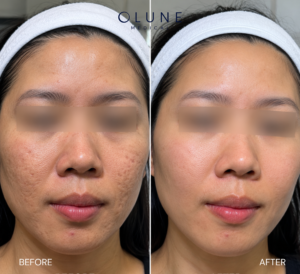
Acne scars develop when inflammation associated with acne damages the skin's underlying collagen.
During healing, the skin may produce too little or too much collagen, leaving visible indentations, uneven texture or raised areas.
Acne scars commonly affect the cheeks, temples, forehead and jawline. Their appearance varies depending on the type, depth and severity of the original inflammation.
At Olune Medical, we assess the characteristics of your scarring to determine whether skin rejuvenation treatments may be appropriate.
Acne scarring develops when inflammation damages deeper skin structures during the healing process.
Contributing factors include:
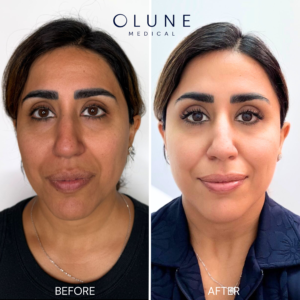
Pigmentation refers to changes in skin colour caused by differences in melanin production or distribution.
Age spots, also known as solar lentigines, are usually flat, darker areas associated with cumulative sun exposure.
Other pigmentation concerns include melasma and post-inflammatory hyperpigmentation, which can develop after acne, irritation or other inflammatory skin conditions.
These changes may create an uneven complexion, particularly across the face, forehead, cheeks and hands.
Different types of pigmentation require different management strategies.
Sun exposure: UV radiation stimulates melanin production and can contribute to sunspots and uneven pigmentation.
Hormonal changes: Pregnancy, hormonal medications and other hormonal influences may contribute to melasma.
Post-inflammatory changes: Acne, irritation and skin injury can leave darker marks after healing.
Natural ageing: Cumulative sun exposure and changes in skin function can make pigmentation more noticeable over time.
Genetics: Individual skin characteristics influence pigmentation patterns and responses to inflammation.
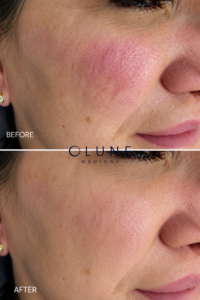
Rosacea is a chronic inflammatory skin condition that primarily affects the central face.
It commonly causes persistent redness, flushing, sensitivity and sometimes visible blood vessels or small inflammatory bumps.
Symptoms can fluctuate, with periods of improvement followed by flare-ups.
Although rosacea has no permanent cure, appropriate skincare, trigger management and medical treatment can help control symptoms.
At Olune Medical, we prioritise skin health and barrier protection before considering any cosmetic skin-quality procedures.
The exact cause of rosacea is not fully understood.
It is associated with a combination of inflammatory, vascular, genetic and skin-barrier factors.
Common triggers include:
Sun exposure and ultraviolet radiation.
Heat and sudden temperature changes.
Alcohol and spicy foods.
Stress and physical exertion.
Harsh skincare products.
Individual environmental triggers.
Not everyone experiences the same triggers.
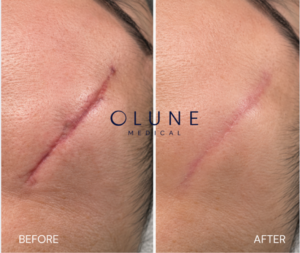
Scarring is part of the skin's natural healing process following injury, surgery, inflammation or other tissue damage.
When the skin repairs itself, new collagen forms to restore the damaged area.
Depending on the healing process, scars may appear raised, indented, thickened or discoloured.
Some scars gradually become less noticeable, while others remain visible for many years.
Skin rejuvenation treatments may help improve the appearance of selected mature scars, depending on their type and location.
What Causes Scarring?
Skin injuries: Cuts, burns and other injuries can damage the skin's deeper layers.
Surgical procedures: Incisions may leave scars as the skin heals.
Inflammatory conditions: Acne and other inflammatory skin conditions can result in scar formation.
Collagen production: Excess collagen may produce raised scars, while insufficient collagen can create depressed scars.
Genetics: Some individuals are more likely to develop hypertrophic or keloid scars.
Wound healing: Infection, prolonged inflammation and tension across a healing wound may influence the final appearance.
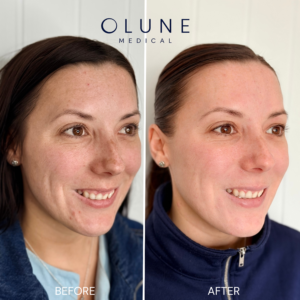
Dull skin describes a complexion that appears less radiant, uneven or tired.
Dehydrated skin occurs when the outer layers of the skin contain insufficient water.
It may appear rough or less supple, with fine lines becoming more noticeable.
Dehydration can affect all skin types, including oily skin, and is different from naturally dry skin.
At Olune Medical, we assess your skin condition and discuss suitable approaches to improving hydration, texture and overall appearance.
What Causes Dull or Dehydrated Skin?
Skin-barrier disruption: A weakened skin barrier can increase water loss.
Environmental conditions: Cold weather, low humidity and indoor heating can contribute to dehydration.
Harsh skincare products: Excessive exfoliation and strong cleansers may disrupt the skin barrier.
Natural ageing: Changes in skin structure and function can affect hydration and texture.
Sun exposure: UV damage can contribute to roughness and uneven skin tone.
Dead skin-cell accumulation: Uneven shedding of surface cells can make the complexion appear dull.
Individual skin characteristics: Genetics and oil production can influence visible pores and skin texture.

The most appropriate treatment depends on your skin concerns, medical history, skin type and desired outcome.
At Olune Medical, your consultation may include discussion of the following options.
Microneedling
A minimally invasive skin rejuvenation procedure designed to encourage collagen remodelling and improve the appearance of selected scars, fine lines and uneven texture.
Skin Boosters
Injectable skin-focused formulations intended to improve hydration and the appearance of superficial skin texture.
Polynucleotides
Treatments intended to support hydration and skin-quality pathways, with results and evidence varying according to formulation and indication.
Medical-Grade Skincare
Personalised skincare recommendations designed to support the skin barrier, protect against UV damage and address specific skin concerns.
NAD3+ Premium Skin Booster
A skin-quality treatment intended to support hydration and improve the appearance of skin texture, subject to product suitability and individual assessment.
Not every treatment is appropriate for every concern. Some conditions require medical treatment or referral rather than cosmetic procedures.
Every skin concern is different, which is why treatment begins with an individual consultation.
During your appointment, we discuss your skin concerns, medical history, previous treatments, current skincare routine and desired outcomes.
Your practitioner will assess relevant factors, including skin texture, hydration, pigmentation, sensitivity and any visible scarring.
Where appropriate, we explain suitable treatment options, expected benefits, limitations, possible risks and the number of sessions that may be required.
Our approach focuses on informed decisions, realistic expectations and personalised care.
Explore skin-quality treatments available at Olune Medical.
Find answers to common questions about consultations for lines and wrinkles, treatment suitability and planning your appointment.
The most suitable treatment depends on your individual concerns. Microneedling may help selected scars and uneven texture, while skin boosters focus primarily on hydration. Pigmentation and rosacea often require specific skincare or medical management.
Acne scars cannot always be completely removed. Some treatments may improve their appearance, particularly selected depressed scars. Results depend on scar type, depth and individual healing response.
Skin boosters primarily address hydration and superficial skin quality. They are not established treatments for removing pigmentation or age spots.
Not always. Individuals with active rosacea, infections, significant inflammation or certain skin conditions may need to avoid or postpone microneedling. A professional assessment is essential.
Dry skin generally produces less natural oil, whereas dehydrated skin lacks sufficient water in its outer layers. Both conditions can occur together, but their management may differ.
The number of sessions depends on the treatment selected, your skin condition and your response. Some procedures require a course of appointments, while others involve ongoing skincare and maintenance.
Hydration-related improvements may become noticeable relatively quickly, while collagen remodelling and changes in skin texture usually take longer. Results vary and cannot be guaranteed.
There is currently no permanent cure for rosacea. However, appropriate skincare, trigger management and medical treatments can help control symptoms and reduce flare-ups.
Some treatments may be combined or scheduled as part of a personalised plan. Suitability depends on your skin condition, the products used and the recommended recovery periods.
Olune Medical offers consultations in Hull, Leeds, and Sheffield. Our team can discuss your concerns and help you arrange an appropriate appointment.
Whether you are concerned about acne scars, pigmentation, persistent redness, scarring or dehydrated skin, our team can help you understand the factors affecting your skin and explore appropriate options.
We believe skin treatments should begin with careful assessment, realistic expectations and a personalised approach.
Olune Medical is a trading name of Olune Ltd, registered in the UK under company number 17238989.
Copyright © 2026 Olune Medical. All Rights Reserved.